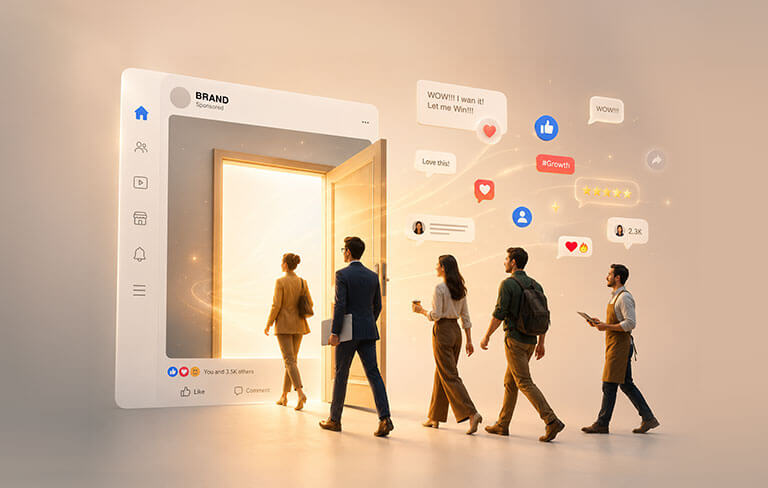
Brands run contests to boost engagement, yet many struggle to get meaningful participation. On the surface, the formula seems straightforward. Offer a bigger prize, attract more entries. Increase the number of required actions, drive more interaction.
But in reality, not all contests perform the same even with similar prizes. The difference rarely lies in what is being given away. It lies in how people are asked to take part.
The Problem With How Contests Are Designed
Many contests are built on assumptions rather than behaviour.
There is a tendency to equate higher value prizes with higher participation. To layer mechanics such as tagging, sharing, commenting — in the belief that more actions will lead to more engagement. To rely on instructions rather than motivation. But these approaches often overlook a simple truth.
Participation is not driven by obligation. It is driven by ease and intent.
When mechanics feel complicated, unclear or effort-heavy, drop-off increases. When the perceived chance of winning feels too low, users disengage. When the interaction feels transactional rather than enjoyable, participation becomes forced rather than voluntary.
In these cases, even strong incentives struggle to compensate for weak design.
Recent Contest Campaigns That Worked And Why
The difference between a contest that drives meaningful participation and one that gets ignored often comes down to structure, emotional relevance, and audience fit.
Recent campaigns by Mashwire illustrate how different contest mechanics can drive engagement in different ways:
-
Brice Mother’s Day Contest
A Mother’s Day giveaway campaign designed around emotional participation rather than simple tagging mechanics.Why it worked:
Generated strong qualitative engagement, with users naturally sharing detailed and heartfelt responses instead of one-word comments. -
Sunshine “Shiro Barley Moments” Contest
A contest built around product experience and everyday lifestyle storytelling.Why it worked:
User responses reinforced sensory and lifestyle associations around the product rather than focusing only on winning. -
Yotsuba Exclusive Media Kit Giveaway
A giveaway campaign designed around aspirational exclusivity and low-friction participation.Why it worked:
Comments reflected authentic sharing of personal break moments, reinforcing the intended brand narrative.
What Actually Drives Participation
The most effective contests are not defined by their prizes. They are defined by their mechanics. A strong mechanic lowers the barrier to entry. It is easy to understand, quick to act on and requires minimal effort to participate. Users should not need to think too hard about how to join.
At the same time, the reward structure must feel realistic. When a contest appears overly competitive or difficult to win, participation declines regardless of prize value. A clear and achievable outcome encourages action.
Relatability also plays a key role. Participation should feel natural, not forced. When mechanics are tied to everyday behaviours — something users already do, notice or experience — engagement becomes more intuitive.
This is where shareability emerges. People are more likely to participate when the activity is something they are comfortable showing others. Not because they are told to share, but because the interaction itself feels worth sharing.
Underlying all of this is emotion. The strongest contests tap into simple triggers — curiosity, humour, pride or a sense of play. These are what make participation feel enjoyable rather than required.
Designing Mechanics That Work
While there is no single formula, certain types of mechanics consistently perform better.
Simple comment-based entries reduce friction by removing unnecessary steps. “Spot” or “Guess” mechanics introduce light challenge and curiosity without requiring high effort. User-generated content can be effective when the barrier is low and the ask feels natural. Participation tied to real-life moments — what users see, do or experience, often feels more intuitive and easier to engage with.
The common thread is intentional design. Mechanics should not be built around what brands want users to do. They should be built around what users are willing to do. This distinction is critical. It shifts the focus from instruction to behaviour.
From Asking for Participation to Earning It
At its core, contest participation reflects a broader behavioural principle.
People do not engage because they are asked to. They engage because it feels easy, enjoyable and worthwhile. This is where many contests fall short. They prioritise output such as more comments and more shares without considering the experience that drives those actions.
When mechanics are designed with consumer behaviour in mind, participation becomes a natural outcome rather than a forced one. Engagement improves not because the prize is larger, but because the path to entry is clearer.
At Mashwire, contest mechanics are not treated as an afterthought. They are designed intentionally — grounded in how people actually behave, not how brands expect them to behave. The objective is not just participation, but meaningful interaction that aligns with both engagement goals and brand positioning.
The best contests don’t ask for participation. They make people want to take part.
A successful contest is not about giving something away. It is about creating a reason for people to engage.
Let Mashwire help you design contest mechanics that people don’t just see but want to take part in.