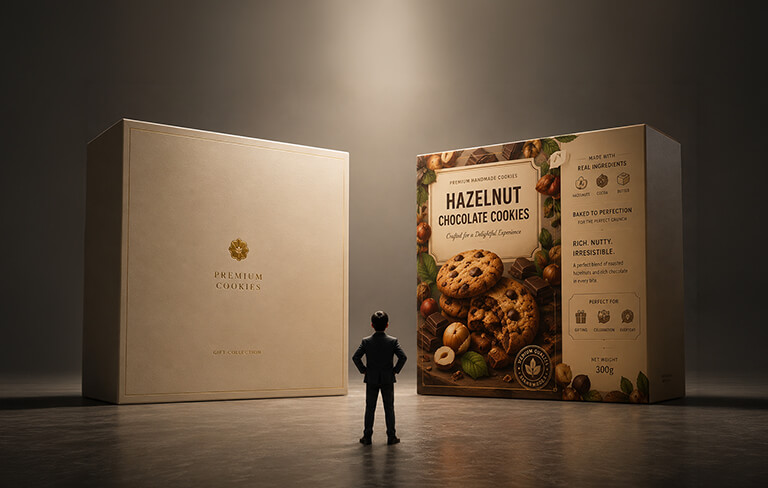
A product’s packaging has seconds to answer one question: “Why should I pick this?” The answer, however, is not always more information. Depending on the product, consumers may need clarity to feel confident, or an experience that makes them want to reach for it in the first place.
This is where packaging design becomes more than a container or information carrier. It can reduce uncertainty, communicate value, create desire and even reshape how consumers perceive when, where or why a product should be used. The key is knowing when information should lead and when experience should take over.
When Clarity Drives Trust
For functional product categories, reassurance often drives the purchase decision. Consumers want to know what they are buying, what it contains, what it does and how to use it. Clear benefits, ingredients, instructions and relevant product information help reduce uncertainty and make the purchase feel more straightforward.
Transparency also plays an important role in building credibility. When consumers can easily find and understand the information they need, they are more likely to feel confident in their choice.
But more information does not necessarily mean better communication. Over-designed packaging can introduce visual noise, causing important product information to compete with decorative elements. When too many colours, graphics, claims and messages fight for attention, clarity can be lost.
The goal is not to put everything on the pack. It is to make the right information easy to find, understand and trust.
When Immersion Drives Desire
For premium and lifestyle categories, the role of packaging changes. Consumers are often buying more than the functional product; they are buying into a feeling, identity or experience. Packaging therefore becomes part of the value proposition.
Texture, finishes, typography, illustration and storytelling can all influence how a product is perceived before it is even used. These elements can signal quality, create intrigue and make the product feel more distinctive.
This is something we have seen in our work with clients as well. For Compendium, rather than simply listing the flavours available across its range, Mashwire transformed the information into a Singapore-inspired “Periodic Table for Spirits”. This gave consumers a visually engaging way to explore different flavours while helping them discover a wider range of products.
The packaging also incorporated elements inspired by Singapore’s heritage and allowed consumers to customise their own variety packs, turning product selection into a more personalised experience.
In this context, less information can sometimes create more desire. Instead of explaining everything upfront, packaging can use mood, suggestion and storytelling to encourage consumers to explore.
The packaging does not simply tell consumers what the product is. It gives them a reason to want to experience it.
Balancing Compliance, Shelf Impact and Emotional Cues
Effective packaging ultimately needs to balance three competing demands: compliance, visibility and emotion.
Regulatory requirements remain non-negotiable, particularly for categories such as food, health and supplements. Mandatory information needs to remain clear and accessible regardless of the creative direction. At the same time, packaging has only seconds to compete for attention on a crowded retail shelf.
This makes shelf impact critical. Distinctive visual elements, strong hierarchy and clear product cues can help a product stand out and communicate its proposition quickly. But visibility alone does not guarantee conversion.
Our work with Sunshine Bakeries offers another example of how these two approaches can work together. The challenge was not simply introducing a new flavour. Consumers typically associate buns with breakfast, while durian was less appealing as a morning food because of its strong smell.
To address this perception, the packaging used a playful fantasy theme, a durian mascot and an illustration style designed to appeal to both adults and children. The result was packaging that communicated the product while creating a more positive emotional association around indulgence and snacking.
This approach was then reinforced through the wider campaign, positioning the bun as an easy, ready-to-eat way to satisfy durian cravings outside of the traditional durian season.
Ultimately, the most effective packaging is not about choosing information over experience, or experience over information. It is about understanding what the consumer needs at the moment of choice.
Clarity builds confidence. Experience builds desire. The strongest packaging knows when to deliver both.
Looking to make your packaging work harder?
Whether your product needs clearer communication, stronger shelf impact or a more immersive brand experience, Mashwire can help transform packaging from a functional touchpoint into a powerful part of the consumer journey. From strategy and storytelling to packaging design and campaign activation, we help brands create experiences that inform, engage and drive purchase.